
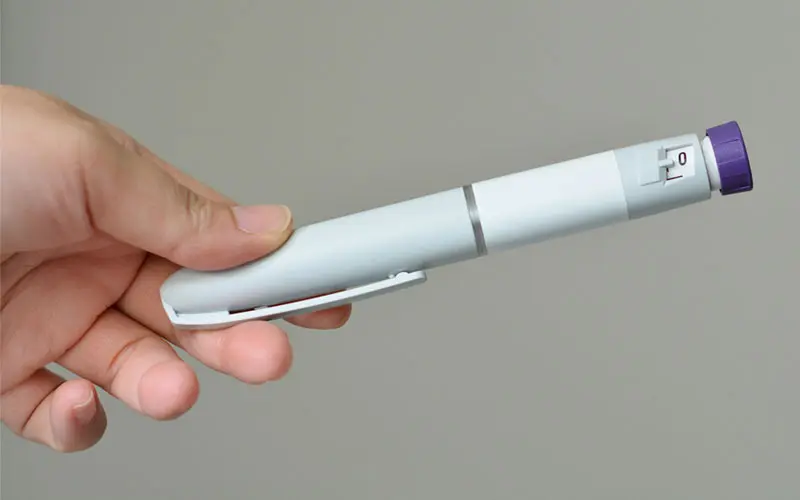
Both are weekly injections. Both are FDA-approved active ingredients for weight management — semaglutide as Wegovy®, tirzepatide as Zepbound®. Both demand the same lifestyle foundation. So how does a prescriber actually pick between them? Four factors, roughly in this order.
Factor 1: The Trial Numbers
Semaglutide's benchmark comes from STEP 1: an average 14.9% body-weight reduction at 68 weeks at the 2.4 mg dose. Tirzepatide's comes from SURMOUNT-1: 15.0% to 20.9% across its three doses at 72 weeks. The usual caveat applies — different trials, different populations — but the gap held up under a direct test: in the SURMOUNT-5 head-to-head trial, tirzepatide averaged 20.2% body-weight reduction versus 13.7% for semaglutide at 72 weeks, both at maximum tolerated doses. On raw effect size, the dual GLP-1/GIP mechanism currently leads.
Factor 2: Your Medical Picture
Effect size is not the first thing a careful prescriber checks — fit is. The exclusion criteria are shared: neither ingredient is used with a personal or family history of medullary thyroid carcinoma or MEN 2, neither is compatible with pregnancy, and pancreatitis history warrants caution with both. Beyond exclusions, your diabetes status, kidney function, other medications, and prior GLP-1 experience all weigh in. Sometimes the medical picture decides the question before the trial numbers get a vote.
Factor 3: Tolerability
Both share the gastrointestinal side-effect profile — nausea, diarrhea, vomiting, constipation, concentrated around dose escalations. Individual response varies enough that some patients who struggle on one ingredient do better on the other, which makes "switchability" a quiet argument for choosing a provider that offers both. Starting on either and reassessing at the dose-adjustment points is a normal, planned part of treatment, not a failure.
Factor 4: Cost and Availability
In practice this factor decides more cases than any other. Insurance plans cover one, both, or neither — and that answer can override every clinical preference. In the cash-pay compounded market, semaglutide programs typically run cheaper (roughly $200–$300/month advertised) than tirzepatide programs ($300–$400), mirroring the brand-price gap. A 20-week-versus-68-week difference in trial duration will never matter to a patient who can only afford one of the two options for a year.
The Bottom Line
If everything else is equal — eligibility, tolerance, coverage, budget — the head-to-head evidence favors tirzepatide on effect size. Everything else is rarely equal, which is why the real decision belongs in a prescriber's hands with your full history and your real budget on the table. Compare providers that carry both ingredients in our tirzepatide and semaglutide program comparisons.
Sources used for medical context
- STEP 1 trial (PMID 33567185) for semaglutide outcomes.
- SURMOUNT-1 summary (ACC) for tirzepatide outcomes.
- SURMOUNT-5 head-to-head trial for the direct comparison.
- FDA approval announcement for exclusions and safety warnings.